Why Walking Does What Scrolling Cannot
There is a particular kind of tired that has nothing to do with sleep. You can get eight hours and still wake up feeling like you have not actually rested, like something behind your eyes never switched off. If you work in front of a screen, answer messages after dinner, and measure your day in notifications instead of hours, you probably know this tired. I knew it too, long before I understood why walking into the hills fixed something that nothing else touched.
This post is not going to promise you healing. Trekking is not therapy and I am not qualified to hand out one. What I can offer is a way of thinking about why putting one foot in front of the other, for hours, on ground that does not care about your inbox, does something real to a mind that has been living mostly online.
The Trouble With a Life Lived on Screens
Modern professional life is built around tasks that never finish. An email answered creates three more. A project closed opens the next one before you have caught your breath. There is no natural end to the workday anymore, only the moment you decide to stop, which for many people never quite arrives. Add constant comparison through social feeds and a phone that rewards you with small hits of attention every few minutes, and you get a nervous system that is always slightly braced, always half expecting the next ping.
The psychologist Alfred Adler, whose ideas shaped how I think about most of this, argued that people are driven by a need to feel capable and connected, what he called striving for significance, balanced against a sense of belonging to something larger than themselves. When work becomes abstract, endless, and disconnected from any visible result, that striving has nowhere to land. You do things all day and feel like you have accomplished nothing. That mismatch, more than exhaustion itself, is what tips people into burnout.
What a Trail Actually Gives Back
A trail solves that mismatch almost by accident. The task is completely concrete: get from here to there, on your own legs, carrying what you need. There is no ambiguity about whether you are making progress. The summit gets closer or it does not. Your legs are tired or they are not. This clarity is rare and it matters more than it sounds. Adler talked about discouragement as the root of most psychological struggle, the sense that your efforts do not lead anywhere. A trail is one of the few environments left where effort and result are still directly connected.
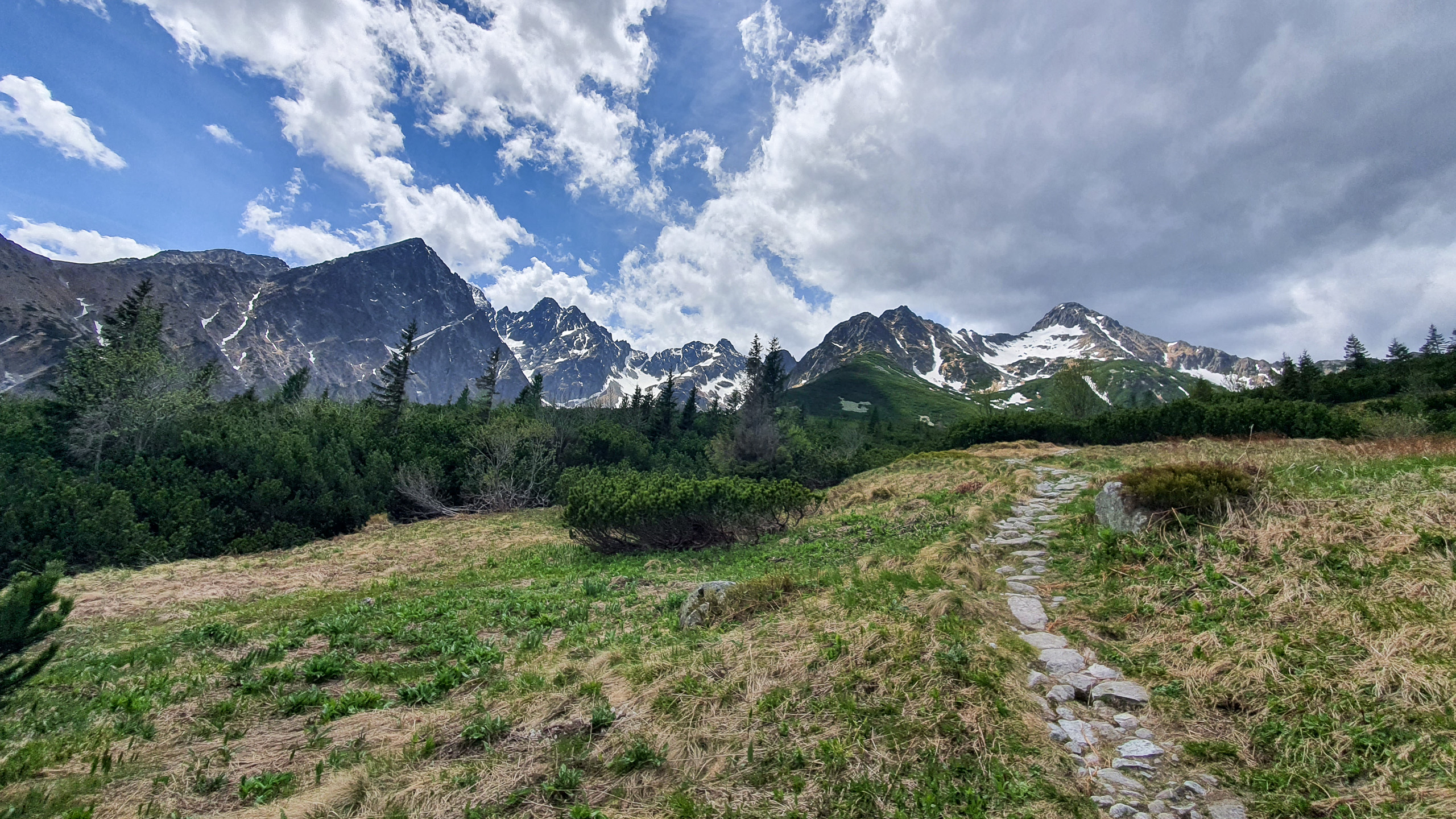
There is also the matter of the body. Screen life happens almost entirely from the neck up. Trekking forces you back into a body that has muscles, fatigue, hunger, and cold. This is not a mystical return to nature, it is simply a return to information your nervous system evolved to use. Attention that has been scattered across seventeen open tabs gets pulled back into a single, physical, present task. Researchers who study attention restoration have shown that environments with lower stimulation and gentle, undemanding sensory input let the parts of the brain responsible for sustained focus recover. A forest path does that. A feed does the opposite.
None of this requires believing in anything beyond what you can observe about your own state after a day on foot. If you find something more in it, a sense of connection to landscape or to something larger than yourself, that is entirely yours to hold. I have met people on trails who describe that feeling in spiritual terms and others who describe the exact same walk as pure physiology. Both are welcome here. I am not going to tell you which one is correct.
Belonging Without a Feed
The second piece Adler kept returning to was Gemeinschaftsgefühl, often translated as community feeling, the sense of being embedded in something beyond your own head. Online, belonging is performed. You post, you get a number back, and the number tells you whether you mattered today. It is a thin substitute for the real thing and most people who rely on it for too long feel thinner for it.
On a trail, belonging looks different. It might be a shared silence with a hiking partner who does not need you to talk. It might be the practical trust you place in whoever planned the route, or the small courtesies exchanged with strangers passing the other direction. None of this is dramatic. It does not need to be. What it offers instead is contact that is not mediated by an algorithm deciding what you see.
A Modest Kind of Repair
What burnout usually needs is not a single insight or a breakthrough, but a period where effort produces visible results again, where the body is used the way it is built to be used, and where connection happens without a screen managing it. Trekking offers all three without dressing them up as anything more than what they are. It will not answer the big questions about meaning that some of you carry into the hills with you. But it tends to quiet the noise long enough that you can actually hear your own thoughts about them, which for most tired, always online people, is already a significant place to start.